


The Digital Shift: Why Electric Car Security Tips Matter
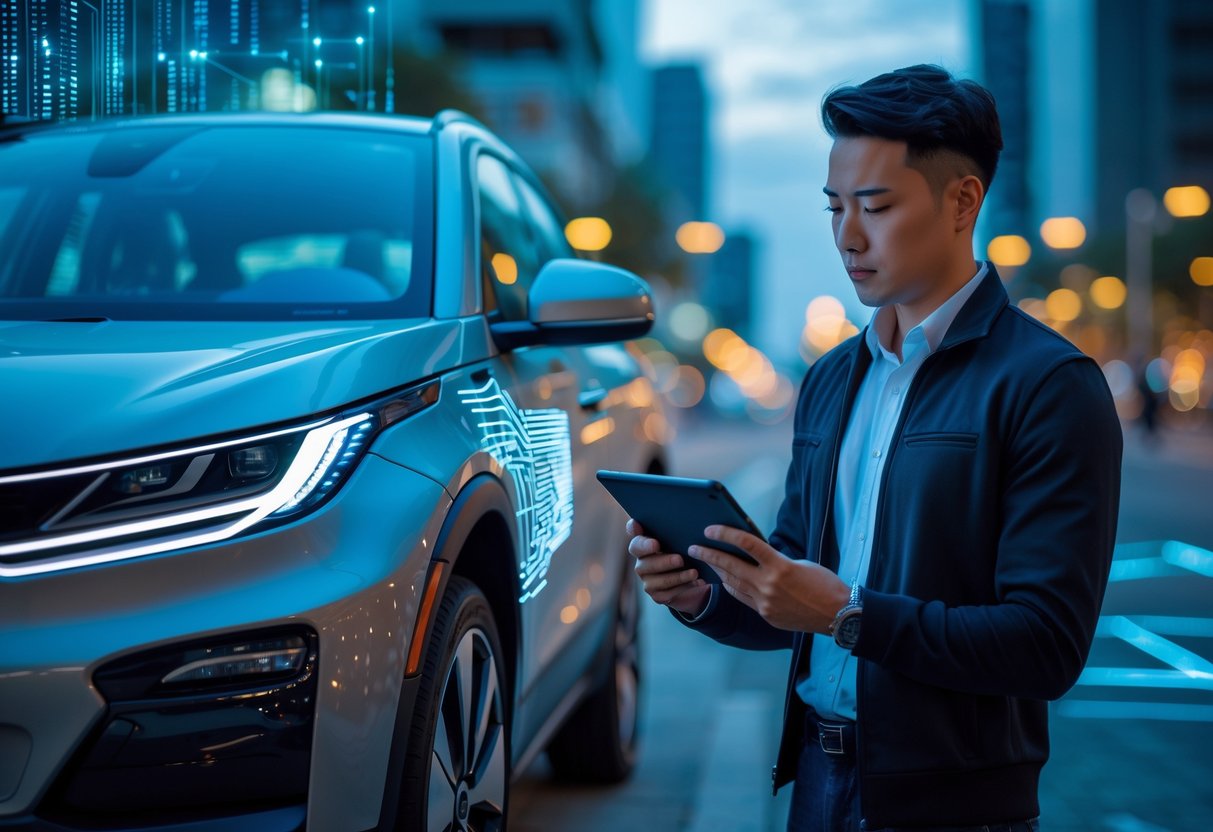
Electric vehicles have changed the game for car security. Suddenly, it’s not just about locks and alarms,now it’s about software, data, and staying one step ahead of hackers.
EVs as Computers on Wheels
Let’s be honest, most of us drive rolling computers these days. Modern electric cars depend on networks of electronic control units for everything from batteries and brakes to touchscreens and self-driving features.
All these systems talk to each other through Wi-Fi, Bluetooth, mobile networks, and those handy over-the-air updates. It’s convenient, sure, but every connection is a possible weak spot for cybercriminals.
If someone intercepts a signal or finds a loophole in the software, they could sneak into the vehicle’s internal network. There have been real cases where weak apps or open modems let outsiders mess with locks or even start the car remotely.
We’ve also started using phone-as-a-key apps, NFC cards, and digital key fobs. If a thief clones or hacks them, they can open your car without ever touching it. So, these days, electric car security tips have a lot in common with cybersecurity advice.
Changing Threats: From Break-Ins to Data Breaches
Gone are the days when car theft just meant a smashed window. Now, many attacks start online.
Thieves target:
- Unsecured mobile apps
- Weak authentication systems
- Compromised public charging stations
- Unprotected home chargers
Researchers have even managed to control infotainment systems and charging units remotely. Sometimes, attackers unlock paid features or change settings using software tricks.
Public chargers aren’t always safe either. If they’re not locked down, someone could steal your data or try to slip malicious code into your car. Even home chargers can be a risk if your Wi-Fi is wide open.
It’s wild to think that threats now travel through cables and wireless signals, not just through doors and windows.
The Tech Factor and Resale Temptation
Let’s face it,EVs are cool. Big screens, smart apps, autopilot,who wouldn’t want one?
But that “wow” factor also attracts thieves with programming chops. They’re often more interested in hacking software than bashing windows.
And there’s serious money in it. EV batteries, electronics, and rare parts are valuable on the black market. A stolen car or even just a battery can disappear overseas in days.
With digital access, theft can be almost invisible. A hacker might just open your car and drive it away, no drama, no broken glass.
Common Tactics Used Against Electric Cars
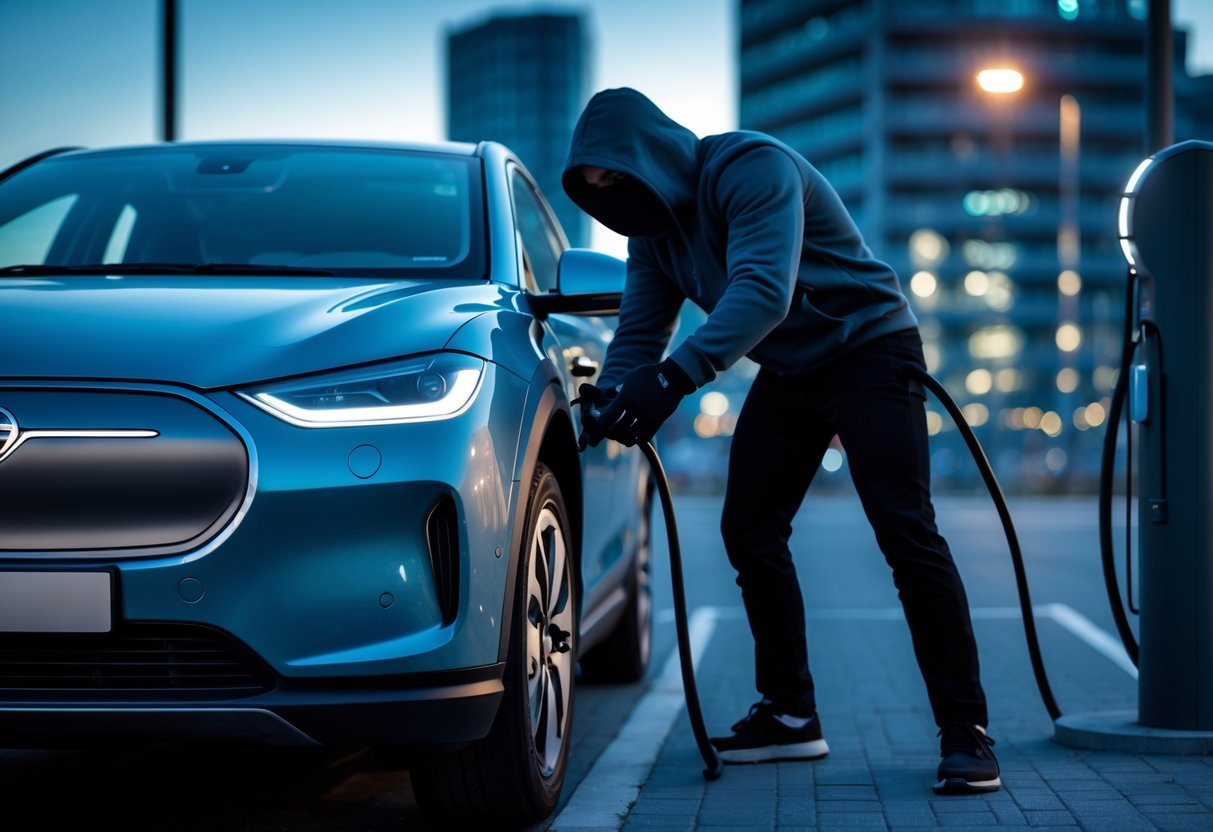
Thieves have gotten creative,mixing digital hacks with old-school break-ins. They exploit wireless keys, onboard computers, and even simple mistakes we make every day.
Relay Attacks & Keyless Entry Exploits
Keyless entry is super convenient, but it’s also a big target. In a relay attack, two thieves use signal boosters to trick your car into thinking the key is right next to it,even if it’s inside your house.
Brands like Nissan and Tesla have been hit repeatedly, and not just by amateurs. The “Kia Boys” exploit made headlines for targeting certain Hyundai and Kia models, too. No need for a crowbar,just digital know-how.
Thieves might also copy signals from your phone-as-a-key app or find holes in the wireless protocol. Once they’re in, it takes minutes to drive away.
Key risk factors:
- Keyless systems without motion detection
- Keys left near doors or windows
- Older systems with weak encryption
Onboard Diagnostic Port (OBD) Hacks
Every EV has an OBD port, meant for mechanics to diagnose issues. Thieves love it, too.
Once inside, they plug a device into the OBD port to program a new key or disable security features. Some crime rings even carry tools made for specific brands.
By tapping into the car’s network, they can change settings or bypass protections designed to keep you safe. OBD attacks often pair with relay attacks: one gets them in, the other gives full control.
Old-School Break-Ins Still Happen
High-tech doesn’t mean immune. Thieves still smash windows, force doors, or target cars in dark parking lots.
Once inside, they might grab valuables or try to access that OBD port. Even with a PIN-to-drive, they can still do damage or swipe your gadgets.
Public chargers are a hot spot. Cars sit unattended for hours, and while full-blown cyberattacks are rare, researchers have shown that weak infotainment or charging systems can leak your data.
Relay Attacks: The Keyless Entry Weak Spot
Relay attacks are all about tricking your EV’s wireless system. Thieves use gadgets to extend your key fob’s signal, unlock your car, and drive off,no broken glass, no noise.
How Signal Boosters Outsmart Your Car
Most new EVs use passive keyless entry. The car pings the key, and if it’s close, the doors open.
In a relay attack, one thief stands near your house with a booster, the other waits by your car. They capture the key’s signal,even through walls,and relay it to the car. The car thinks you’re right there and unlocks.
There’s no forced entry, no alarms. It’s a flaw in how keyless systems are designed,always searching for a signal. That’s why relay attacks are a huge concern for anyone using these systems.
Walk-Away Locking & Keyless Start: Handy, But Risky
Lots of EVs offer walk-away locking. When your key moves out of range, the car locks itself. Mirrors fold in, lights blink, all that jazz.
Keyless start is similar. As long as the key’s detected inside, press a button and go.
But if your keys are sitting near the front door, a thief can relay the signal and your car will unlock,even while you’re asleep. The system can’t tell if the signal’s legit or being spoofed.
Systems that make you press a button on the key are less vulnerable than ones that unlock automatically.
Quick Tips: Faraday Pouches & PIN to Drive
Want to make things harder for thieves?
Keep keys away from doors and windows,upstairs is better. Use a Faraday pouch to block your key’s signal when you’re home. Test it from time to time; if your car won’t unlock through the pouch, it’s working.
Many EVs let you set a PIN to Drive. Even if someone gets in, they can’t drive off without your code. Set it up in your car’s security settings and don’t pick something obvious.
CAN-Bus Hacking & Module Injection: The New “Peel and Steal”
Thieves have moved on from crowbars to code. Now, they tap into your car’s internal network and send fake messages to unlock or start it,no keys, no alarms, just a few minutes of work.
What’s CAN-Bus, and Why’s It a Target?
The Controller Area Network (CAN-Bus) is basically the nervous system of your EV. It lets modules,like the battery, motor, doors, and brakes,talk to each other.
Problem is, CAN was built for reliability, not security. If someone plugs in and sends a command that looks legit, the system usually just accepts it. No ID checks, no questions.
In a CAN-bus hack, thieves get to the wiring,maybe behind a headlight or inside a bumper. They plug in a device and send commands to:
- Unlock the doors
- Disable the alarm
- Enable keyless start
The car thinks everything’s normal. No need to clone a key or break a window.
This method is quick, quiet, and tough to spot. The car’s data traffic looks totally normal from the outside.
Manufacturer Watchlist: Hyundai, Kia, Tesla, and More
Attacks like CAN injection have made headlines for hitting the Hyundai Ioniq 5 and Kia EV6. The “Kia Boys” exploit showed just how easy it is for some models.
Thieves go for exposed wiring in body panels, pop off some trim, and connect their tool. It usually takes just a few minutes, and there’s no mess left behind.
It’s not just those brands, though. Many EVs share similar network setups, so others could be at risk too. But high demand and strong resale value make certain models especially tempting.
Some owners worry most about keyless relay attacks, but honestly, direct CAN-bus hacks can be even more dangerous,they skip the key altogether.
Secondary Digital Immobilisers and Security Upgrades
Let’s talk about digital immobilisers,one of the more overlooked electric car security tips. Adding a secondary digital immobiliser can really cut down your risk.
These systems sit between critical modules and block unauthorised CAN messages. Unlike the factory stuff, you’ve got to jump through an extra hoop before the car will start,think PIN codes on the steering wheel, smartphone app approval, or encrypted driver tags.
- A secure PIN sequence using steering wheel buttons
- Smartphone app approval
- Encrypted driver tags
Because the device filters CAN traffic, injected start commands just don’t work. It’s a solid roadblock.
But let’s not stop at just one layer. Layered protection is the way to go:
| Security Measure | Purpose |
|---|---|
| Secondary immobiliser | Blocks false start commands |
| Secure OBD lock | Prevents diagnostic port misuse |
| Physical deterrents | Increase time and effort needed |
Sure, nothing’s foolproof. But adding independent authentication and message filtering makes CAN-based theft a headache for would-be thieves.
Charging Cable Theft: A Unique EV Problem
One of the more annoying issues for EV owners? Charging cable theft. It’s a growing headache, and it’s not just about losing a cable,it can leave you stranded, too.
Why Charging Cables Are a Target
EV charging cables are loaded with copper wiring, and copper’s always in demand. Thieves strip the outer layer, yank out the copper, and sell it off,sometimes online, sometimes as scrap.
Public rapid chargers are hit hardest. They’re often in open car parks, poorly supervised at night. A thief can cut a cable in a minute or two, which is way easier than dealing with a whole charging unit.
With more EVs on the road, cable theft’s gone up in parts of the UK. News outlets and operators have reported a spike, especially at fast-charging sites. Sometimes, organised groups hit several chargers in one go.
The real pain? Operators have to replace the entire cable assembly, which can cost a lot more than the copper itself. Drivers show up expecting a working charger and get a nasty surprise.
Incidents in Residential Areas
Most thefts happen at public charging stations, but home chargers aren’t off the hook. If you park on a driveway or in communal spaces, your cable’s out in the open.
On residential streets, especially where there’s no off-road parking, cables often stretch across the pavement. That makes them easy pickings, especially late at night.
Communal car parks in flats or estates? Often no lights, no cameras. One theft there can mess up charging for everyone.
Even if it doesn’t happen often, it feels like a gut punch. Waking up to a cut cable and no way to charge at home? Not a great start to the day.
Protecting Your Charging Cable at Home and On the Go
There are some practical ways to keep your cable safe. Most modern EVs lock the cable while charging, which helps, but it won’t stop someone with cutters.
At home, you might want to:
- Install motion-activated lighting
- Use CCTV or a video doorbell
- Store the cable out of sight when you’re not using it
- Mount a holster on the wall to keep it tidy and less obvious
If you’re out and about, pick busy, well-lit charging spots. Some operators use cut-resistant sleeves, forensic marking, or even GPS trackers in cables now,pretty clever, right?
Always report damaged chargers through the operator’s app. The faster they know, the quicker they can fix it and maybe stop it happening again.
Physical Security Measures for Modern Electric Vehicles
Physical deterrents are still some of the best electric car security tips. Sometimes, the old-school tricks work best.
Deterrence with Steering Wheel Locks
A steering wheel lock is a classic for a reason. It blocks the wheel and tells thieves: “This’ll take work.”
Most high-tech thefts,relay attacks, for example,depend on speed. A big, obvious lock slows things down and makes thieves nervous. They’ll usually move on rather than risk making a scene.
If you’re buying a lock, look for:
- Hardened steel
- Snug fit, no wobble
- Decent key system
- Some sort of security certification
Bright colours? Not just for show,they make it clear from across the car park that you’re not an easy target.
Use it every night or whenever you’re away for a while. Brand matters less than consistency.
Driveway Bollards and Smart Parking
Driveway bollards are another strong move. They’re a solid barrier,if your car can’t drive over it, neither can a thief.
You’ve got options: fold-down, removable, or telescopic. Steel ones set in concrete are the toughest. Expect to pay between £150 and £300, plus whatever installation costs.
Smart parking helps, too. Try to:
- Park nose-in to make towing harder
- Block your EV with another car if you can
- Stick to well-lit spots with cameras
Lighting is key. Motion-activated lights can really put thieves off.
Physical barriers and visible security send a clear message: “Not worth the hassle.”
Lockable OBD Port and Charging Points
The OBD port is handy for mechanics, but thieves love it for programming new keys. A lockable OBD cover makes life harder for them.
They’re cheap and easy to fit. Just make sure it’s secure and can’t be popped off without a key.
Charging kit is expensive, too,cables can run £150 to £400, so don’t leave them lying around.
To keep things safer:
- Use lockable wall boxes
- Pick cables that lock at both ends
- Stash loose cables out of sight
Securing access points closes off easy routes for thieves. Sometimes, the small upgrades make the biggest difference.
Smart Tech Solutions for Enhanced Protection
Let’s get into the digital side of electric car security tips. Adding tech like PIN to Drive, ghost immobilisers, GPS trackers, smart alarms, and dash cams can make your EV a tough target.
PIN to Drive and Ghost Immobilisers
PIN to Drive means you need a code before the car moves. Even if someone clones your key or hacks a signal, they’re stuck without the PIN.
This is especially good against relay attacks,where thieves boost your key fob’s signal from inside your house. Some brands (like Tesla) have it built in, but you’ve got to turn it on yourself.
The ghost immobiliser is a stealthy add-on. It blocks the motor unless you enter a secret button combo inside the car. No fobs, no blinking lights,nothing obvious to spot. Insurers often like these, since they stop the car moving even if someone gets inside.
Vehicle Tracking Technology
GPS trackers help you find your EV if it’s stolen. They ping your car’s location to a secure app, so you’re not left guessing.
Some meet Thatcham standards and could shave a little off your insurance. They often offer:
- 24/7 monitoring
- Movement alerts
- Geofencing
- Remote immobilisation (with some models)
If the car moves without your say-so, you get an instant alert. Police can use the data to track it down. The best trackers even log journeys and tamper attempts,handy if you ever need evidence.
Smart Alarms and Dash Cams
Modern smart alarms don’t just make noise. They ping your phone if something’s up,door opens, window breaks, car gets lifted.
Some can spot keyless entry attacks or weird signal spikes. Others link to trackers, so you get both the alert and a live map.
Dash cams are your silent witnesses. They record front and back, driving or parked.
- Parking mode
- Motion detection
- Cloud storage
- Wide-angle lenses
Clear footage helps with insurance and police. And honestly, just seeing a camera can make thieves think twice.
Secure Charging at Home and in Public
Good electric car security tips don’t stop at the car itself. Where and how you charge matters, too.

App-Locked Wall-Box Chargers
If you’re charging at home, a wall-box charger with access control is a smart pick. Many let you lock or unlock charging via app, RFID card, or PIN. That keeps strangers from stealing your power or messing with your settings.
Enable user authentication and turn off “plug and play” if you can. Some chargers even alert you if someone fiddles with the cable or tries to unplug it.
Physical security still matters. Try to:
- Mount the charger out of reach from the street
- Use motion lights or CCTV nearby
- Pick a tethered cable that locks in place when not in use
If your charger’s at the front of the house, a metal enclosure or impact-rated case adds peace of mind.
Manufacturer Watchlist: Brands with Known Vulnerabilities
Some brands have become prime targets,worth mentioning if you own one. The “Kia Boys” exploit made headlines, with certain Kia and Hyundai models being especially vulnerable to basic theft tools.
Tesla’s had its own issues, like relay attacks and key fob cloning. Even the mighty Model S has been caught out by hackers using radio equipment.
Nissan Leaf, BMW i3, and older Renault ZOE models have shown weaknesses, too,mainly involving app-based controls or unencrypted wireless signals. If you drive one of these, consider doubling up on both digital and physical security.
Check for software updates regularly, and don’t assume the latest model is immune. The landscape changes fast, and thieves are always looking for new tricks.
Safe Overnight Charging Strategies for Electric Car Security
Charging an EV overnight? It’s convenient, especially with those lower energy tariffs, but let’s not forget about electric car security tips while we’re at it.
Try parking close to a wall and keeping your charging cable short and tidy. That makes it less tempting for someone to mess with and helps avoid the classic trip hazard.
Charging in a well-lit spot is a game changer. Motion-triggered lights can spook would-be thieves, and your security cameras will thank you for the extra clarity.
Modern chargers have smart features that give you more control. You can schedule charging for certain hours, get app alerts if charging stops, or even shut off the charger remotely if something seems off.
If you use a driveway, don’t leave the cable stretched across public pavements,it’s just asking for trouble. Charging in a garage? Keep that door locked the whole time. These little habits really do help keep both your car and charger safe.

Electric Car Security Tips for Apartment Dwellers
Living in a block of flats with shared parking? Yeah, electric car security gets trickier here. You just can’t control the space like you would at home.
If your building has communal chargers, see how access is managed. Chargers that need an RFID card or app approval are way better than open sockets anyone can use,less chance of someone stealing your electricity.
Thinking about installing your own wall-box in a shared area? Get written approval from whoever manages the building first. Go for a charger that requires user authentication and put it somewhere visible, ideally where security cameras can see it.
Always check that CCTV covers your bay and that the lights actually work at night. If cable theft has happened nearby, consider a tethered and lockable cable. Mark your gear clearly so it’s easier to recover if it ever goes missing.
Regional EV Theft Trends and Electric Car Security Tips for South East London & Kent
EV theft in South East London and parts of Kent has its own patterns. If you’re curious about your local risk, here’s a helpful contact for more info.
The Rise of EV Theft: Manufacturer Watchlist and Local Realities
Police stats and industry studies agree: Greater London has the most EV thefts in the UK. Nationally, it’s still rare,about 0.1% of EVs get stolen,but London’s numbers stand out.
South East London sits by major roads like the A2, A20, and M25. Thieves love these fast exits. Kent, right next door, has quick routes to ports and motorways, making it easier for stolen vehicles to disappear.
As more people buy EVs in these areas, more models end up on thieves’ radar. The Kia E‑Niro, Hyundai Ioniq 5, Kia EV6, Nissan Leaf, and Jaguar I‑Pace all pop up in theft data more than you’d hope. If you drive a Kia or Hyundai, you might’ve heard of the “Kia Boys” exploit,it’s a real headache. Tesla owners aren’t immune either; relay attacks have targeted their keyless systems, so don’t get too comfortable.
Urban streets with little off-street parking make things worse. Lots of people rely on kerbside charging, which means cars spend the night in open, less secure spots.
Electric Car Security Hotspots: Dartford, Bexley, Bromley, Abbey Wood
Some places just seem to have more trouble, thanks to their layout and traffic flow.
- Dartford – Right by the M25 and Dartford Crossing. Quick getaways are easy here.
- Bexley – Suburban streets, plenty of rail links, and lots of driveways without gates.
- Bromley – Tons of EVs, big residential areas, and cars often parked on open forecourts.
- Abbey Wood – Dense housing near the Elizabeth line. High foot traffic can hide suspicious activity.
All these spots are close to major roads or rail stations, or just over the border into Kent. Thieves usually go for cars parked overnight on driveways or residential streets, not so much those in locked car parks.
Tech-savvy criminals love quiet residential roads,relay attacks on keyless systems happen when it’s dark and nobody’s watching. It’s unsettling, but knowing the risks is half the battle for anyone serious about electric car security.
Local Electric Car Security Tips for Residents
If you’re living in SE London or Kent and own an electric vehicle, you’ll want to think seriously about electric car security tips. Sure, most modern EVs come with digital keys, tracking, and handy app alerts,but let’s be honest, adding a few extra layers can make all the difference.
Practical actions:
- Keep your key fobs in a signal‑blocking pouch when you’re at home. It’s a simple move, but it can trip up would‑be thieves using relay devices.
- Don’t forget to enable your car’s built‑in tracking and remote immobilisation features. They’re there for a reason, and they actually work.
- Consider fitting a steering wheel lock that’s easy to spot. Sometimes old‑school deterrents are still the best.
- Whenever you can, park inside a garage or at least behind a locked gate. It’s not always possible, but it’s worth the effort.
- Motion‑sensor lighting on your driveway? Yes, it’s worth it. Thieves don’t like being in the spotlight.
When you’re out charging in public, pick well‑lit bays with CCTV coverage. It’s not just about convenience,security cameras really do discourage opportunists.
Avoid leaving your charging cables lying around overnight, especially in places that aren’t busy or well‑watched. It sounds obvious, but sometimes we all get a bit too trusting.
It’s also smart to double‑check your insurance policy for coverage against keyless theft. Oh, and don’t skip those software updates,manufacturers like Tesla and Kia have faced high‑profile vulnerabilities (think Tesla relay attacks or the notorious Kia Boys hack), so staying current matters.
Honestly, just a few tweaks to your daily habits can help keep your EV safe,especially if you’re in an area where thefts have made the news. For more ways to protect your electric vehicle, check out our comprehensive EV security guide.
