


Why Upgrade Your Car Security in Kent?
Car theft’s gotten sneakier and more high-tech lately, especially around Kent. Factory alarms, immobilisers, and even keyless entry all have weak spots,thieves know them well. That’s why folks are turning to layered defences: steering locks, OBD port protectors, ghost immobilisers, and real-time vehicle trackers.
Factory Security: Where It Falls Short
Most drivers figure their car’s built-in security is enough. Honestly, it’s just a start.
Standard alarms? They’re set off by doors or motion, but in a busy car park, who really pays attention? Thieves have gotten good at blending in and moving fast.
Keyless entry is handy, but it’s a double-edged sword. Without signal-blocking pouches or extra barriers, relay attacks can open and start your car in under a minute.
Factory immobilisers stop old-school key copying, but modern thieves use digital tools instead. They’re not fazed by a basic siren or immobiliser anymore.
- Alarms are predictable and easy to ignore
- Immobilisers can be tricked with specialist gadgets
- Lots of cars still don’t have built-in GPS tracking
- Owners rarely get instant alerts
If your car does vanish, good luck tracking it down with just the standard kit.
New-Age Car Theft: Tech vs. Tech
Today’s car thieves are as much hackers as they are burglars. They know their way around electronics and software.
- Relay attacks (amplifying your key’s signal)
- Key cloning through the OBD port
- Signal jamming to block your fob
- Tow-away thefts with flatbeds
Relay attacks are especially sneaky,your key stays in your house, but the crook outside tricks your car into unlocking and starting. It’s scary how fast it happens.
Some thieves just plug into your OBD port, programme a new key, and drive off without a fuss. No window smashing, no noise, just gone.
Even old-fashioned tow-away jobs are on the rise. Most alarms don’t go off unless a door opens or glass breaks, so trucks can snatch cars in broad daylight.
Why Layered Security Wins
Layered security is about mixing visible deterrents,like steering locks or pedal boxes,with hidden digital defences and GPS trackers.
A steering lock is obvious and off-putting. Add a ghost immobiliser or kill switch, and even if a thief gets in, they’re stuck.
Vehicle trackers give you a fighting chance to get your car back. Some ping your phone with live updates, which is a lifesaver for the police.
- Visible lock slows them down
- Immobiliser or kill switch stops the engine
- Tracker boosts recovery odds
Let’s face it, crooks want quick wins. The more hurdles you throw up, the more likely they’ll move on to an easier target.
Visible Physical Deterrents: Steering Locks, OBD Port Protectors & More
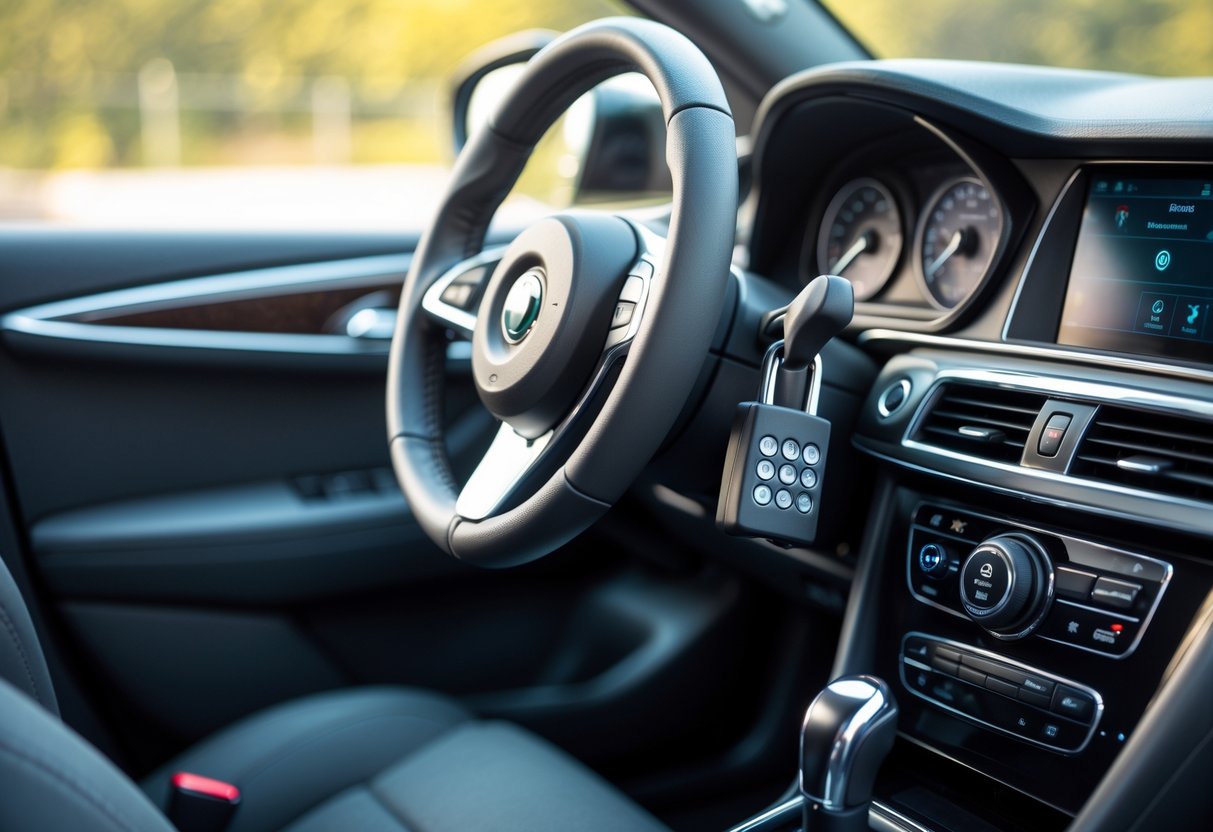
Physical deterrents,think steering locks, pedal boxes, and OBD port protectors,work because they’re right there in your face. Thieves see them and have to think twice.
Steering Locks: Classic but Still Effective
Steering locks block the wheel and scream “not worth the hassle.” Full-cover models like Disklok are heavy-duty and tough to beat, but a basic bar across the wheel still does the trick for most folks.
Look for Sold Secure or Secured by Design ratings for peace of mind. Bright colours help too,no one wants to spend extra time fighting a lock in plain sight.
- Check sizing for your wheel
- Go for hardened steel
- Pick anti-drill/anti-pick locks
- Pick a visible colour
Full covers are bulkier to store, but bars are quick to fit and remove. Both slow crooks down and make your car look like a pain to steal.
Gear Stick Locks: Lock It in Place
Gear stick locks clamp your shifter in reverse (manual) or park (auto), blocking gear changes. Even if the thief gets the engine running, they can’t drive off.
They’re less obvious than steering locks, but once spotted, they’re a solid deterrent. Make sure it fits your car and isn’t a pain to use daily.
Pedal Boxes: No Pedal, No Go
Pedal boxes are hardcore,they box in your clutch, brake, or all the pedals, so nobody can press them. You see these a lot on vans, but they work for cars too if you’re leaving it parked a while.
They’re heavy, tough, and take a bit longer to fit. But if you want visible, physical security, they’re hard to beat.
Van Hook Locks Kent & Specialist Commercial Security
Commercial vehicles and vans are prime targets. Standard locks just aren’t enough, especially if you’re carrying tools or stock.
Van Hook Locks: Extra Muscle for Kent Vans
Van hook locks add a second, independent locking point to your doors. Their hook-shaped bolts grab onto reinforced keeps, making it way harder to pry doors open.
We fit them on sliding and rear doors, especially on Transits, Vivaros, and Sprinters. They’re not wired into your van’s central locking, so electronic hacks won’t open them.
Thatcham-approved hook locks are the gold standard, and some insurers might even give you a break on premiums.
- Resist crowbars and prying
- Have separate keys
- Clearly visible on working vans
Tradespeople in Kent count on these to keep their gear safe between jobs.
Deadlocks: Bolt Down Security
Deadlocks slide a steel bolt into a reinforced plate,totally separate from your van’s electronic locking. No relay attack or cloned key will open these.
They’re popular on rear and cab doors for overnight security. Just remember, you’ve got to lock them manually each time,no auto-locking here.
- Strong steel for door strength
- Simple, reliable design
- Affordable for fleets
Deadlocks and hook locks together? That’s a tough combo for any thief.
Defending Against Peel and Steal
Peel and steal is a nasty trick,thieves bend back the top corner of a van door to reach inside and pop the lock. Hook locks and internal steel plates are your first line of defence here.
- Anti-peel brackets
- Internal shielding
- Heavy-duty external locks
Transits and Sprinters get targeted a lot, so visible upgrades really do help. Thieves want quick wins, and these slow them down big time.
CAN-Bus Ghost Immobiliser, OBD Port Protectors & Digital Defences
Modern cars run on software as much as hardware. That’s why digital security,ghost immobilisers, OBD port protectors, and advanced trackers,are a must in Kent.
How Ghost Immobilisers Work
Ghost immobilisers tap into your car’s CAN-Bus system, blocking the engine until you punch in a secret code using dashboard or steering wheel buttons. No extra fobs, nothing obvious for a thief to spot.
Because they’re digital, there are no wires to cut or visible gadgets to yank out. Relay attacks and CAN injection tricks just won’t work if the immobiliser’s set up right.
Some systems also alert you if someone tries to hack your car, which is a nice bonus.
OBD Port Protectors: Block the Easy Route
OBD port protectors lock down your car’s diagnostic port, stopping thieves from plugging in their key cloning gadgets. It’s a cheap, effective upgrade,especially for cars known to be vulnerable.
We recommend pairing these with a ghost immobiliser for double protection.
Vehicle Trackers: Find Your Car Fast
Vehicle trackers have gotten smarter,some are even Thatcham-approved and work with your phone. They send real-time updates, so if your car goes missing, you’ve got a fighting chance to get it back.
Some stats? According to the AA, cars with trackers are 4x more likely to be recovered after theft. Not a guarantee, but it helps.
We fit trackers discreetly and can show you how to use the app. For customers in Kent, we’ll install at your home or work,no hassle, no wasted time.
Comparison Table: Steering Locks vs. Immobilisers
| Device | Ease of Use | Security Level |
|---|---|---|
| Steering Lock | Easy – quick to fit/remove | Moderate to High (visible deterrent, physical barrier) |
| Immobiliser (Ghost/CAN-Bus) | Moderate – code entry needed | Very High (hidden, digital barrier) |
Why Choose Us for Security Upgrades in Kent?
We install van hook locks, ghost immobilisers, OBD port protectors, and vehicle trackers right at your home or workplace in Kent. No need to drive to a shop or wait around,just book a time, and we’ll sort it out on your terms.
Want to learn more about how each device works or which combo is best for your car or van? Get in touch and let’s chat. We’re local, experienced, and genuinely want to help you outsmart the thieves.
Ghost Immobiliser Features and Advantages
When it comes to Van hook locks Kent, ghost immobiliser, steering locks, OBD port protectors, and vehicle trackers, the Ghost Immobiliser stands out as a CAN-based system that’s both discreet and smart. There are no LED lights, antennas, or radio signals to give away its presence,just a hidden layer of security.
To unlock the engine, you enter a personal sequence using your car’s own buttons, like those on the steering wheel or center console. If you ever need to, you can change this code.
Some of the useful features include:
- No extra key fob to lose or forget
- Encrypted messages on the CAN network
- Temporary service or valet mode for mechanic access
- Blocks diagnostic tool bypasses
Because it’s tucked away in the car’s wiring, it doesn’t attract attention. It’s a solid match for most cars built after 2006, when CAN systems became the norm.
Honestly, if you want robust protection without making your car look like Fort Knox, this is a top pick.
How Ghost Immobilisers Defend Against Key Cloning
Key cloning is everywhere these days, especially with keyless cars. Thieves can capture your key fob signal and use it to get in and drive off.
A CAN-Bus Immobiliser, though, throws a wrench in their plans. Even if they copy your fob, they can’t start the engine without your custom code.
This extra step helps block:
- Relay attacks
- Keyless range extension tricks
- Electronic key programming attempts
Think of it as digital armor. The factory alarm guards the doors, but the immobiliser decides who gets to start the engine.
By splitting access and ignition, we make it much harder for someone to steal your vehicle with just a copied signal.
OBD Port Protectors Kent: Stopping Electronic Attacks
Modern thieves love targeting electronics instead of smashing and grabbing. By plugging into the Diagnostic Port, they can sidestep factory security and program new keys frighteningly fast.
Why OBD Ports Are a Target
The On-Board Diagnostics (OBD) port gives mechanics a direct line to your car’s brain. It’s handy for repairs, updates, and key programming.
But it’s also a weak spot. Regulations mean the port is always accessible,usually under the dash. Thieves just break a window, plug in, and they’re halfway to stealing your car.
With the right gadget, they can program a blank fob or even shut off some security features. The whole thing can take just minutes, no original key needed.
Keyless cars are especially at risk. Once inside, the OBD port is a direct line for hackers. Older cars and vans don’t always have software to block these attacks.
That’s why we treat the OBD port as a high-priority security spot.
OBD Port Locks, Electronic Blockers, and Relocation
OBD Port Protectors (or locks) add a physical shield. They enclose the port in tough metal, so you need a key or code to get at it.
They don’t turn off the port, just slow down thieves. That extra hassle can make a big difference.
Some OBD blockers cut the connection electronically when the immobiliser is on. Only an authorised tag or card can reconnect it for servicing.
Relocation kits are another trick. We can move the port to a hidden spot,maybe inside the glovebox. If a thief can’t find it fast, they’ll probably give up.
For most people, mixing a lock and relocation is the best bet.
Why Professional OBD Security Installation Matters
We always recommend a pro for installing OBD security devices. Modern cars are complicated, and a bad install can set off warning lights or void your warranty.
A skilled installer fits the device cleanly, tests everything, and makes sure you can still get service when needed.
When adding OBD Port Protectors or blockers, you’ll want to keep keys or codes handy for garages. Don’t lock yourself,or your mechanic,out.
If your car is under warranty, double-check with the manufacturer first. Done right, you get real protection and peace of mind.
Vehicle Trackers Kent: GPS Tracking for Fast Recovery
Van hook locks Kent, ghost immobiliser, and vehicle trackers all work together, but GPS tracking is what helps us actually find a stolen car. The right tracker, with proper monitoring, can make all the difference.
Comparing GPS Tracker Types
You’ve got three main styles: self-powered, hardwired, and OBD plug-in trackers. Each has its pros and cons.
Self-powered trackers are battery-operated and can be stashed anywhere. They keep working even if the car’s battery is cut, but you have to remember to charge them.
Hardwired trackers pull power from the car itself. They’re always on, support extras like ignition sensing, and are easier to hide. Professional fitting is a must for reliability.
OBD plug-in trackers are the easiest to install,just plug them in. But they’re also easy for thieves to spot and yank out. For expensive cars, hardwired is the way to go.
S5 vs. S7 Thatcham-Rated Trackers
In the UK, most insurers want S5 or S7 Thatcham-rated trackers. S5 is the gold standard, with driver tags, 24/7 monitoring, instant alerts, and often remote immobilisation.
If someone moves your car without the tag, the system pings an alert. S5 is perfect for high-risk vehicles.
S7 is a bit simpler,no driver tag, but still offers live tracking and strong monitoring. It’s more affordable and still ticks the boxes for most insurers.
Live Alerts and Police Monitoring
Modern trackers send real-time alerts to your phone or a monitoring centre. You’ll know right away if your car moves, is tampered with, or leaves a defined area.
With police-monitored recovery, trained staff coordinate with UK police and give them live location updates. That’s a massive advantage,no more chasing your own car on an app and hoping for the best.
Quick, accurate updates mean your car is more likely to be recovered before it disappears for good.
Keyless Entry Security: Practical Upgrades
Keyless entry is super convenient, but it’s also a big target. The good news? A few simple steps can make a real difference,think Faraday pouches, smart key settings, and visible deterrents like steering locks.
Faraday Pouches: Cheap and Effective
A Faraday pouch blocks radio signals from your key fob. Thieves can’t grab or boost the signal for a relay attack if the key’s inside the pouch.
Just drop your key in, and the car won’t detect it. That’s a huge roadblock for criminals lurking near your home.
Look for pouches that:
- Block all keyless entry signals
- Have a strong double lining
- Seal tightly with no gaps
Test yours regularly. If you can open the car door with the key in the pouch, it’s time for a new one.
Don’t forget spare keys,keep them shielded and away from entry points.
Stopping Relay Attacks
Relay attacks use two devices: one near your house to catch the key’s signal, and another by the car to trick it into unlocking and starting.
Layered security is your friend here. Disable keyless entry if you can, use motion-sensing keys, and add a steering lock for a visible warning. Ghost immobilisers are another solid backup.
Some new cars have tech that measures distance more accurately, blocking these attacks. It’s worth asking about if you’re car shopping.
And hey, don’t underestimate old-school barriers like locked gates,they still work.
Best Habits for Key Security
Good habits go a long way. Don’t leave keys near the door or in sight. Thieves scan for signals through windows and walls.
Store keys in a Faraday pouch, away from entry points, and not near other electronics. If you lose a key, get the car reprogrammed and wipe the old one from memory.
Check for software updates,they often patch security flaws. Treat your key like a credit card; if someone copies it, you’re in trouble.
Extra Anti-Theft Upgrades: Layer Up
Factory alarms and immobilisers are decent, but thieves keep finding new ways in. Upgrading with things like battery kill switches, advanced alarms, or catalytic converter locks can really help.
Alarm Upgrades and Sensors
Most standard alarms are pretty basic. Upgrading to a system with shock sensors, tilt sensors, and inside motion detection adds serious protection.
Shock sensors trigger if someone hits a window. Tilt sensors catch towing or wheel theft. Interior sensors react to movement inside the car.
Some alarms link to your phone, so you get alerts instantly,and with a tracker, you can see where your car is.
Look for Thatcham-approved systems, encrypted fobs, and anti-tamper sirens with backup batteries. Professional installation is key; bad wiring can mean false alarms or a dead battery.
Done right, a good alarm makes breaking in much riskier for any would-be thief.
Comparison Table: Steering Locks vs. Immobilisers
| Device | Ease of Use | Security Level |
|---|---|---|
| Steering Locks | Simple to fit/remove | Visual deterrent, moderate |
| Immobilisers (incl. Ghost) | Set and forget (code needed) | High, covert digital protection |

We handle installation of all these security upgrades,Van hook locks Kent, OBD port protectors, immobilisers, trackers, and more,right at your home or workplace in Kent. No need to drive to a shop or wait around; we bring the tools and expertise to you, making it as painless as possible to boost your vehicle’s security.
Battery Kill Switches and Anti-Theft Upgrades in Kent
Battery kill switches are one of those old-school but still effective anti-theft tricks. For folks in Kent looking at van hook locks, ghost immobilisers, steering locks, OBD port protectors, or vehicle trackers, this is another layer of protection worth considering.
A battery kill switch basically cuts the power between your battery and key systems. No power? No start. If a thief can’t get the engine to turn over, they’re probably moving on.
We can fit a manual kill switch somewhere sneaky inside the cabin or under the bonnet. Flick it, and the circuit breaks. That’s it,simple, but it works, especially on older vehicles missing modern immobilisers.
Some new kill switches use a remote fob or keypad, while others rely on a secret button sequence. A bit of extra convenience, but the main thing is to keep it discreet.
- Hide the switch somewhere only you know
- Use heavy-duty wiring that matches your car’s needs
- Make sure it doesn’t mess with any safety systems
This isn’t a replacement for an alarm, by the way. It’s just another headache for thieves,anything that slows them down helps.
Catalytic Converter Locks: Extra Security for Kent Drivers
Catalytic converter theft is out of control lately. Those parts have precious metals, so thieves can’t resist. They’ll crawl under and have it off in minutes.
We can fit a catalytic converter lock or cage, usually made from toughened steel. It clamps around the converter or bolts to the chassis, making removal a whole lot harder.
Some use thick cables, others solid shields. The bright colours? That’s not just for show,it tells would-be thieves this car won’t be an easy win.
- Check it fits your make and model
- Look for corrosion resistance
- Make sure the mounting points are solid
Professional fitting is usually best here. A well-installed lock or cage won’t make your converter theft-proof, but it will make thieves think twice.
Choosing the Right Van Hook Locks, Ghost Immobilisers, and Trackers in Kent
Picking the right security for your car or van in Kent isn’t just about what’s trendy. It’s about real risks and what you’re willing to spend. Having a clear plan helps avoid wasted cash and weak spots.
Assessing Your Vehicle’s Risk: Steering Locks, OBD Protectors, and More
Start by checking local theft data. In 2024, more than 850,000 vehicles were stolen in the US alone,wild, right? Some makes and models are just bigger targets, especially popular vans and pickups.
Look at how your car unlocks and starts. Got keyless entry? Watch out for relay attacks. Park on the street? Higher risk. Garage? Not foolproof, but it helps.
- Where do you park most often?
- How old or popular is your vehicle?
- What factory security is already there?
- What’s the crime rate in your area?
High-risk vehicles really need layers,think steering wheel lock plus a tracker.
Budgeting for Security Upgrades: Trackers, Locks, and Beyond
Set a budget early. Steering locks can be as little as £30, while a full alarm and immobiliser setup might run £600 or more with professional installation.
| Device Type | Typical Cost Range | Ongoing Fees |
|---|---|---|
| Steering wheel lock | £30–£120 | None |
| Pedal or brake lock | £40–£150 | None |
| GPS tracker | £40–£150 | Annual or monthly subscription |
| Alarm with immobiliser | £200–£600+ | Usually none |
Check for insurance discounts too. Some companies knock up to 20% off if you’ve got approved anti-theft gear. That can help balance out the upfront spend.
Don’t splash out on features you’ll never use. Sometimes a good visible lock is all you need for an older, low-risk car, but if you’ve got a newer van or car, it’s worth investing in more advanced kit.
Professional Security Consultations: Get the Right Fit in Kent
If you’re not sure what’s best, book a security check with a pro. We come out to your home or workplace in Kent, so there’s no hassle for you. Our team looks over your vehicle and recommends the best mix of van hook locks, ghost immobilisers, trackers, or OBD port protectors for your setup.
We’ll check the wiring, see what’s already fitted, and make sure whatever you choose won’t mess with your warranty. Plus, professional installation means it’ll work when you need it,and you’ll get the paperwork for insurance.
Sometimes a quick chat with a specialist saves you from a costly mistake down the line.
Comparison Table: Steering Locks vs. Immobilisers
| Device | Ease of Use | Security Level |
|---|---|---|
| Steering Lock | Very Easy | Moderate |
| Immobiliser | Moderate | High |
Frequently Asked Questions: Ghost Immobilisers, Vehicle Trackers, and More
Modern car security is a mix of immobilisers, smart alarms, GPS trackers, physical locks, and even biometric systems. Combining these can stop a thief from even starting your engine, or let you know the second something’s wrong.
What are the most effective types of car immobilisers right now?
Thatcham-approved electronic immobilisers are still top-tier in the UK. They cut power to the starter or fuel system unless the right code is present.
Aftermarket CAN bus immobilisers are getting popular too. You have to enter a unique button sequence inside the car,no key fob signals, so relay attacks don’t work.
Some newer setups use encrypted tags or smartphone authorisation. That’s another barrier for thieves.
What advanced alarm systems actually work?
Look for alarms with dual-zone sensors, shock and tilt detection. If someone tries to tow your car or force a door, you’ll know.
Smart alarms with app control are great,you can arm, disarm, and get alerts wherever you are. Viper SmartStart and similar systems add GPS tracking too.
Loud sirens are okay, but real-time alerts are what really matter.
Are there innovations in vehicle tracking that reduce theft?
Modern trackers use 4G LTE or LTE-M for better coverage, so you’re less likely to lose signal in car parks or built-up areas.
Geo-fencing is a big one. Get notified if your vehicle leaves a set area,your driveway, for example. Some trackers connect directly to police recovery systems, and motion-activated reporting means less chance of being spotted by thieves.
How do steering wheel locks help?
Steering locks are a strong visual deterrent. If a thief sees a heavy-duty bar across the wheel, they’ll usually move on to an easier target.
Brands like The Club use reinforced steel to resist cutting. They won’t stop electronic hacks but do make theft riskier and more time-consuming.
What’s new in biometric car security?
Some high-end cars now have fingerprint recognition in start buttons or infotainment systems. The engine won’t start unless it recognises you.
Facial recognition is coming too, mostly in new luxury models. Not mainstream yet, but it’s only a matter of time.

What window security films or glass treatments can best prevent smash-and-grab thefts in vehicles? (Van hook locks Kent, ghost immobiliser, steering locks, OBD port protectors, vehicle trackers)
Honestly, if you’re worried about quick break-ins, laminated security window film is a solid choice. This stuff bonds right onto the glass, so even if someone takes a swing at your window, it doesn’t just shatter everywhere.
The glass might crack, sure, but the film keeps it all together. That extra layer means thieves have to work a lot harder and longer to actually get through, which is often enough to make them give up.
But here’s the thing,professional installation is key. If the film isn’t fitted properly, especially around the edges, it leaves weak spots that just make the whole thing pointless.
