
💡 Key Takeaways
- The click you hear when you unlock your car is the final mechanical response, not the start of the process.
- The Body Control Module (BCM) is the central controller for all lock logic and convenience functions in a modern car.
- Unlocking relies on remote keyless entry (RKE) cryptographic authentication: the BCM verifies the fob’s rolling code before anything moves. Immobilizer checks happen separately at engine start; passive-entry systems add a proximity layer on top.
- Rolling codes generate a unique signal for each press, preventing replay attacks and making any captured signal useless.
- The four stages of the sequence are: RF signal transmission, BCM authentication, power distribution, and mechanical actuator movement.
- A dead fob battery causes the majority of unlock complaints. Start there before assuming a deeper fault.
The click you hear is the last step, what really happens when you unlock a car
The common assumption is that pressing unlock sends power straight to the door lock. It feels that way because the response is so familiar: thumb press, light flash, click. But the click is not the command being sent. It is the car announcing that several invisible decisions have already gone your way.
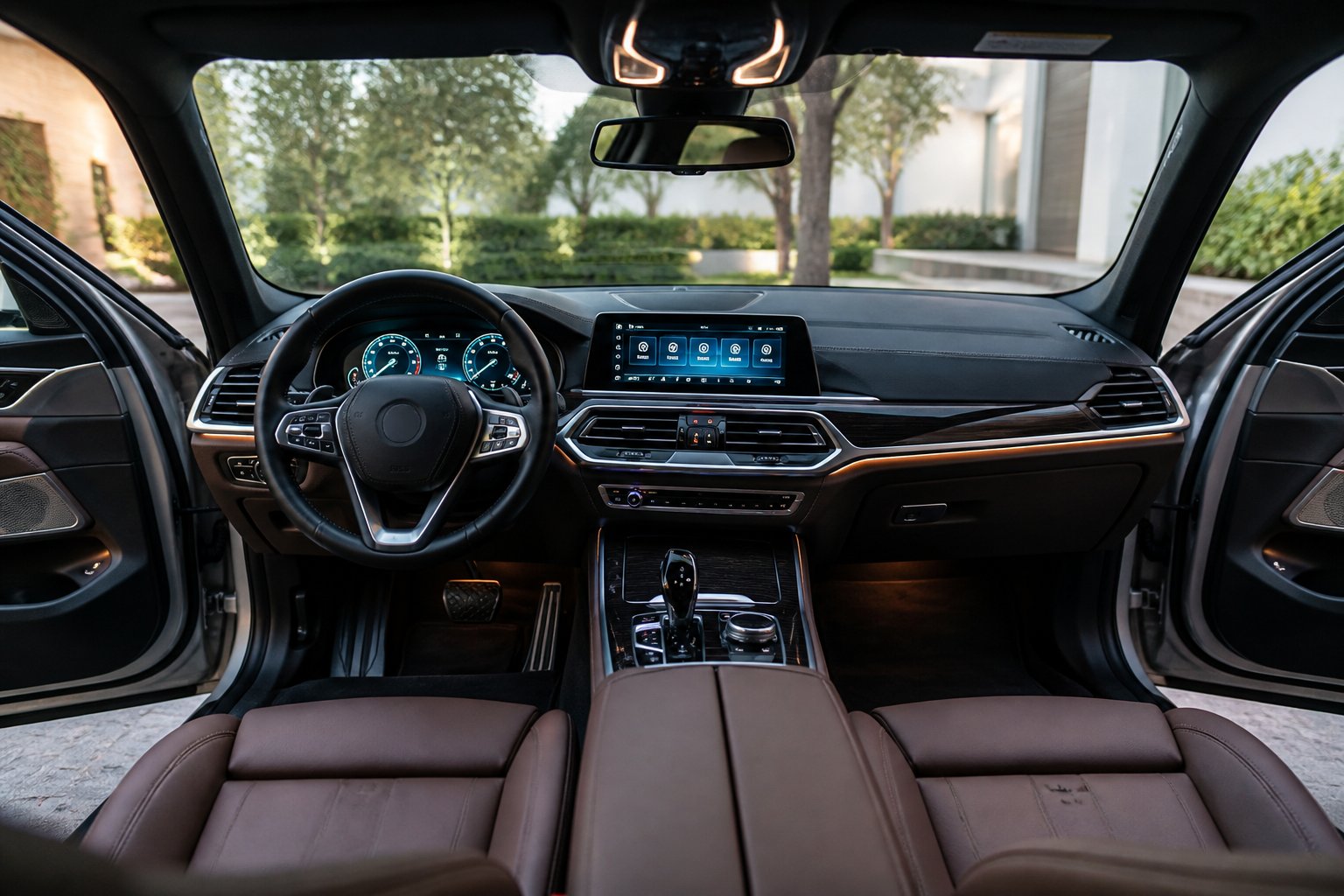
That familiar click is the mechanical finish line, not the starting signal. By the time you hear it, four distinct stages have already run in sequence: RF transmission, BCM authentication, power routing, and actuator movement, all in a fraction of a second. The modern car does not simply hear a fob and obey. It wakes, listens, verifies, allocates power, and only then moves metal.
That chain matters the moment something goes wrong. A fob that stopped working, a door that won’t respond, an intermittent failure you can’t reproduce, understanding where the process breaks down tells you exactly where to look. Most problems sit at stage one or two, not at the lock itself. The mistake most owners make is treating every unlock problem as a broken latch, when the system may never have reached the latch in the first place.
The useful way to think about remote unlocking is not as a convenience feature, but as a tiny authorization system with a mechanical ending. Once you see it that way, the symptoms become much less mysterious. No lights and no click points upstream. Lights but no movement points downstream. Intermittent range loss usually says more about power, interference, or synchronization than about a dying door motor.
The BCM and the handshake verification loop
At the center of every unlock sequence sits the Body Control Module. Think of it as the gatekeeper: it checks incoming signals, authorizes commands, sequences power delivery, and reports system status across the vehicle network, typically over CAN or LIN bus. Most unexplained unlock failures trace back to BCM logic or a communication breakdown, not the door motor itself. That’s worth knowing before you start pulling door panels, because the actuator can be perfectly healthy while the permission to move never arrives.
The security mechanism driving this process is the handshake verification loop. When you press unlock, your key fob transmits a signal and the BCM runs a rapid check using remote keyless entry (RKE) authentication, verifying a rolling cryptographic code embedded in that signal. Only if the code matches what the BCM expects does it authorize the next stage. Nothing moves until that handshake succeeds.
Why does that matter in practice? Because the BCM is not looking for any recognizable signal from your fob. It is looking for the right signal at the right moment in the right sequence. A weak fob battery, heavy radio interference, a receiver problem, or a rolling-code counter that has drifted can all produce the same human experience: you press the button, the fob LED blinks, and the car behaves as if it never heard you.
Rolling codes ensure every press generates a unique signal. Even if someone captures your fob’s transmission, that code is already expired before they can use it, which is exactly why rolling codes are so effective against replay attacks, where criminals record a signal and play it back later to gain entry. The important detail is not that the code changes. It is that yesterday’s valid instruction becomes useless the moment the system moves on.
It’s also worth understanding what the handshake loop does not handle. Immobilizer authentication is a separate process, tied to engine start rather than door entry. In passive-entry vehicles, a proximity check also runs before anything opens. These are distinct security layers, not one combined event. Conflating them leads directly to misdiagnosis. A car that unlocks but refuses to start may have an immobilizer issue. A car that starts but is unreliable on remote unlock may have an RKE, receiver, fob, or BCM communication issue.
Rolling-code sync failures are a classic example. They’re regularly mistaken for hardware faults, technicians have ordered module replacements for what turned out to be a simple synchronization issue. On most vehicles, re-sync happens automatically after a few fob presses. When it doesn’t, the manufacturer’s reset procedure usually takes just a few minutes. The better diagnostic question is not, “Which part failed?” It is, “Which permission in the chain did the car refuse to grant?”
The four-stage wake-to-unlock sequence
Stage 1, Signal broadcast
Pressing the fob button transmits a coded UHF radio signal, typically at 315, 433, or 868 MHz, to the car’s receiver. A low-power detector keeps that receiver listening continuously without meaningfully draining the battery. From the driver’s side, this stage feels instantaneous. Underneath, the car is trying to stay alert without spending its 12-volt battery on a full-time listening job.
Passive-entry systems work differently. The car emits a low-frequency (LF) field at around 125 kHz to wake and locate the fob before anything else happens. That path is entirely separate from the button-press sequence. This is why a vehicle can behave differently when you touch the handle versus when you press the button, even though both actions appear to do the same thing. They are not just two ways to unlock the door. They are two different paths into the same decision tree.
Stage 2, Authentication
With the receiver active, the fob and vehicle run through RKE authentication: rolling codes and cryptographic confirmation exchanged in both directions. Rolling codes block replay attacks by changing the expected code after every use. This is the point where convenience becomes security, and where many false assumptions begin. A strong-looking fob signal is not enough. The car has to trust it.
Relay attacks are a separate threat. Attackers amplify the fob’s passive-entry signal to fool the car into thinking the fob is nearby when it isn’t. Newer vehicles counter this with LF proximity checks or ultra-wideband (UWB) distance-bounding, though effectiveness varies by model. The trade-off is familiar in vehicle electronics: the more seamless the entry experience becomes, the more carefully the car has to prove that the fob is physically where it appears to be.
If authentication fails, the BCM never enables door power. That explains why a fob with a fresh battery can still fail inside a parking structure, near an RF noise source, or in a congested wireless environment. The signal left the fob fine, the handshake just didn’t close. If you’re seeing repeated failures in the same spot, move a few meters and try again before assuming a fault. The first thing people usually notice is reduced range, but the more useful clue is location. A failure that follows the vehicle is different from a failure that only happens in one corner of a garage.
Stage 3, Power distribution
Once authentication clears, the BCM closes internal relays and routes voltage to lighting, mirror motors where fitted, and the target door lock actuator in a deliberate sequence. Loads are staggered to manage inrush current and avoid a sharp draw on the battery. Welcome lights and mirror movements appear before the latch moves because the system prioritizes lower-draw components first, a brief gap between the lights and the click is the system working exactly as designed.
This is where many normal behaviors get mistaken for faults. A small delay does not automatically mean the car is struggling. It may simply mean the BCM is sequencing loads, protecting the battery, or waiting for a door module to acknowledge the command. The hidden bottleneck is often not the lock motor, it is coordination between modules that have to agree before anything mechanical happens.
Stage 4, Mechanical execution
The actuator moves, the latch changes state, and interior welcome features activate at roughly the same moment. This is the only part most people hear, which is why it gets blamed for problems it did not cause.
If exterior lights come on but the door stays locked, the electronic sequence almost certainly completed fine. The fault is mechanical, somewhere in the actuator, linkage, or latch assembly. Test the physical backup key. If it opens the door, the electronics are off the hook and the investigation shifts to hardware. That test takes ten seconds and rules out half the possible causes. If the key also feels stiff, sticky, or inconsistent, you have a very different problem than a radio or BCM fault.
Quick symptom guide, likely failure stage:
- No lights, no click, likely RF/receiver or fob battery (Stage 1/2).
- Lights on, no click, power sequencing is fine; likely actuator/linkage (Stage 3/4).
- Intermittent range loss, rolling-code sync issue or RF interference (Stage 1/2).
- Driver door only on first press, intentional programming, not a fault.
Real-world behavior: cold-weather and safety-lock scenarios
On a cold morning, welcome lights can come on a full second before the click. Owners often read that gap as a fault, it’s thermal lag in the actuator, normal and harmless. Grease stiffens, seals drag, plastic parts contract, and the lock that felt crisp in summer may sound lazier in winter. The room for concern begins when the delay becomes uneven between doors, repeats in mild weather, or turns into a buzz without movement.
Single-press unlock releasing only the driver door isn’t a malfunction either. It’s a deliberate manufacturer decision to reduce accidental full unlocks in public spaces. A second press opens the rest. Many drivers who switch brands notice this and wrongly assume something is broken. The feature can feel annoying in a driveway and useful in a dark parking lot, which is the trade-off manufacturers are trying to balance. Security settings often make more sense in public than they do at home.
When authentication fails in a noisy RF environment, a busy parking garage, for example, the BCM rejects the command with no visible feedback beyond the fob LED blinking. Stepping a few meters outside often clears it on the next attempt. If your car supports both RKE and passive entry, try both methods to determine whether the problem is specific to one path. Failures that persist across multiple attempts and locations need proper investigation, not repeated button pressing.
Button mashing is the point where people often make the problem harder to read. Repeated presses can blur the symptom pattern, especially if the issue involves rolling-code synchronization or intermittent reception. A calmer method works better: note whether the lights flash, whether one door or all doors fail, whether the backup key works, and whether the problem changes with location. The car is giving clues, but only if you stop treating the click as the whole story.
Step-by-step diagnosis: fob battery to BCM software
Start with the fob battery, it resolves more unlock failures than anything else and costs almost nothing. Test range from a few different distances. Then use the mechanical backup key to open the door: this bypasses all the electronics and quickly tells you whether the actuator or linkage is the real problem. Those two steps alone clear the majority of reported unlock failures before any further diagnosis is warranted.
Do not skip the range test just because the fob LED still lights up. That little LED only proves the fob has enough power to illuminate itself, not that it can transmit a clean signal far enough for the receiver to authenticate it reliably. A weak battery often fails gradually: first from across the parking lot, then from a few spaces away, then from beside the door. Shrinking range is usually an early warning, not a personality quirk of the car.
If the problem persists, consult the manufacturer’s guidance and book dealer service. On supported vehicles, you can adjust passive-entry range and audit digital-key sharing through the manufacturer’s app. Some BCM fixes require authenticated dealer tools, and no third-party software bridges that gap reliably. That limitation frustrates owners who are comfortable with general OBD-II scanning, but body electronics and key authorization are intentionally restricted. In this area, access control is part of the security model.
A sensible decision order looks like this: replace the fob battery, test both fobs if you have them, try the mechanical key, compare button-press unlocking with passive entry, check whether the behavior changes by location, then escalate. If both fobs fail in the same way, the odds shift toward the vehicle. If one fob fails and the other works normally, the vehicle has already given you the answer.
Common mistakes that make problems worse
Storing fobs near exterior doors or in coat pockets close to building walls is one of the most consistently overlooked habits. Physical placement is a real first line of defense against relay theft, and it almost never appears in the troubleshooting guides people actually read. Convenience creates the risk: the closer the fob sits to the car-facing side of the house, the easier it is for a passive-entry system to be tricked into believing the key is nearby.
Ignoring low-battery warnings until a full failure forces a dealer visit is equally avoidable. A fob battery takes minutes to swap and costs very little, waiting until the car won’t open at all turns a minor task into a potentially expensive diagnostic appointment. A surprising share of diagnosed “BCM faults” trace back to fob batteries that had been running low for weeks, with owners assuming the shrinking range signaled something far more serious.
Another common mistake is replacing parts in the order they are easiest to imagine rather than in the order the system actually works. Door actuator replacement makes sense only after the car has proved it is sending the command and power to that door. Fob replacement makes sense only after battery, synchronization, and alternate-key checks are exhausted. The expensive part is not always the failed part, it is often just the most visible one.
What the system protects against, and where its limits are
Correct RKE authentication shuts down simple replay attacks. Relay attacks are a different threat, they target passive-entry proximity specifically, and many current systems remain vulnerable. Newer UWB-based designs push that resistance further, but nothing is absolute. Vehicle entry security is risk reduction, not a guarantee against a determined thief with the right equipment.
The distinction matters because owners often buy one solution for the wrong problem. A Faraday pouch can reduce passive-entry relay risk when used properly, but it will not repair a weak fob battery, a damaged antenna, or a failing actuator. Motion-sensing fobs can help when they are stationary, but they do not protect much while being carried around. UWB can improve distance judgment, but model implementation still matters. Security features are strongest when they match the threat you actually face.
The failure modes worth knowing are mostly predictable: intermittent range loss, partial unlocks where the lights flash but the latch stays closed, and rolling-code sync losses after a fob battery swap or an over-the-air (OTA) update. None of these signal catastrophic failure, and most are diagnosable with basic steps before any dealer visit is warranted.
Sync loss after a battery swap catches people off-guard more than almost anything else. The fob and BCM drift out of step, and a fresh battery can suddenly seem to make things worse. It isn’t the battery, it’s the code counter resetting. If multiple keys fail simultaneously, if reprogramming becomes necessary, or if the manufacturer flags a firmware update, professional diagnosis earns its cost. The NHTSA recalls database keeps records of software-related recalls and is worth checking if you notice a recurring pattern of BCM misbehavior on your specific model.
The realistic expectation is simple: modern keyless entry is highly reliable, but it is not magic. It depends on radio conditions, battery health, software state, module communication, and mechanical linkage all agreeing at the same time. When it works, you hear a click. When it doesn’t, the click is missing for a reason.
Things the spec sheets don’t tell you
- RF range figures are measured in open-air, interference-free conditions. In a busy parking structure or near dense wireless traffic, real-world range can drop noticeably from the marketed number.
- UWB passive entry is genuinely better technology, but certain door handle positions and body angles still produce inconsistent LF-field wake detection, especially in cold weather.
- The delay between button press and audible confirmation varies more than most drivers notice. Some BCMs prioritize authentication speed; others prioritize verification completeness. You feel the difference most when toggling rapidly between lock and unlock.
- Relay attack protection marketed as “motion sensing” requires the fob to be completely still to trigger. Keep it in a coat pocket while walking and the motion sensor stays active. Leave it on a hook by the door and that protection largely disappears.
Frequently Asked Questions
What happens inside a modern car when you press unlock?
Pressing unlock sends a coded RF signal to the car. The BCM authenticates the fob’s rolling code, powers the lock circuit, and the door actuator moves. That audible click is the final step in a sequence that takes well under a second, not proof that the lock was the only part involved.
What is the Body Control Module (BCM)?
The BCM is the central controller for your car’s convenience systems, including door locks. It authenticates incoming signals, sequences power delivery, and communicates system status across the vehicle’s CAN bus network, the decision-maker sitting between your fob and the door.
What is the handshake verification in remote keyless entry?
It’s the authentication exchange between your fob and the BCM. Each time you press unlock, the fob sends a rolling code the BCM must recognize before it acts. This check blocks replayed or copied signals from working. The immobilizer check is a separate process that only runs when you start the engine.
What are rolling codes used for in car fobs?
Rolling codes generate a unique value for every button press. Because the code changes each time, a thief can’t capture your signal and reuse it later, making it one of the most effective security layers built into modern keyless entry systems.
What should I do if my car remote unlock range drops?
Start with the fob battery. A fresh cell restores range more often than most people expect and rules out the simplest cause first. If range stays poor after a new battery, compare both fobs if available, try different locations, then have the receiver module or antenna connection checked.
Why would only my driver’s door unlock with one press?
That’s a deliberate manufacturer setting. A single press releases only the driver’s door to reduce accidental full unlocks in busy public spaces. Press twice and the remaining doors follow. It’s a security feature, not a fault, and it can often be adjusted in vehicle settings on supported models.